Movement
Tuning Fork (Accutron)
A humming fork instead of a ticking balance wheel.
- Typical accuracy
- About ±2 seconds per day, or roughly a minute a month.
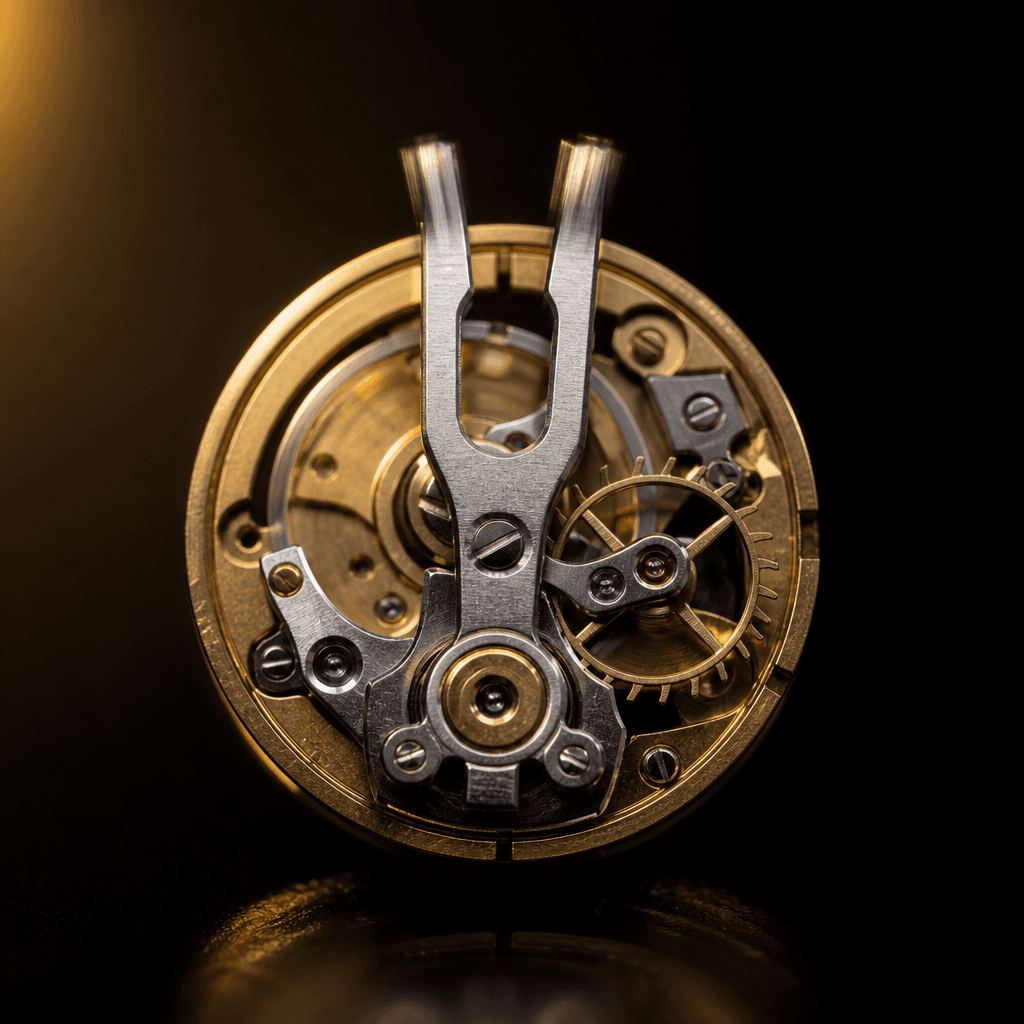
How it works
A battery drives a tiny tuning fork that vibrates 360 times a second. Two pawls convert that vibration into rotation of an index wheel, moving the hands in continuous, silent motion. Bulova launched it as the Accutron in 1960 — the first electronic watch, and the first accurate to within a minute a month.
Strengths
- Hums audibly instead of ticking — an unmistakable signature
- Genuinely smooth, continuous seconds hand
- Historically significant and collectible
- More accurate than any mechanical watch of its era
Trade-offs
- Obsolete: parts and specialist servicing are scarce
- Requires a low-voltage battery, often needing an adapter today
- Index wheel teeth are microscopic and easily damaged
- Superseded entirely by quartz
Care tips
How to keep one running well between services.
- Have it serviced only by a specialist who still has index wheels and pawls
- Use the correct 1.35V-equivalent cell or a proper adapter, not a modern 1.55V cell
- Keep it away from magnets, which will disturb the fork
Keep reading
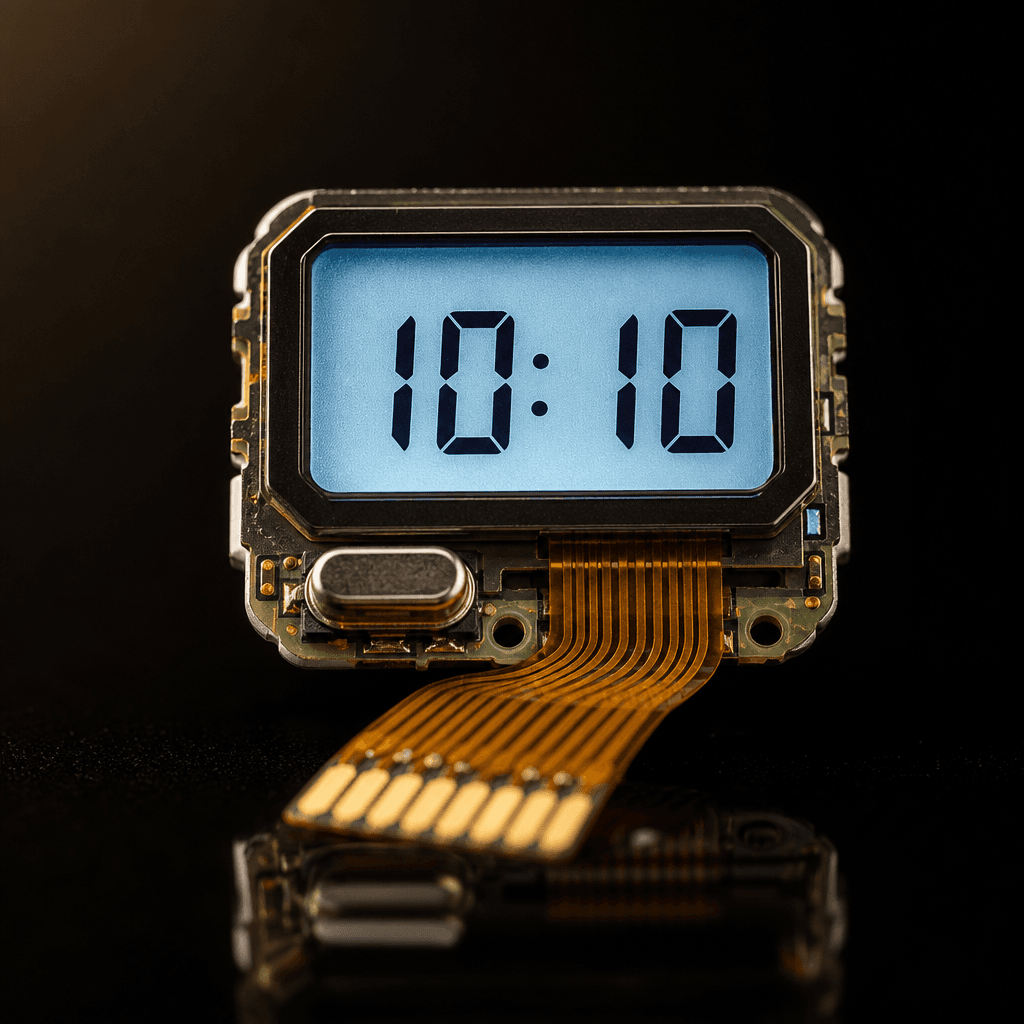 Movement
Digital (LCD/LED)
A quartz movement with a screen instead of hands.
 Complication
Date
The most common complication — the day of the month.
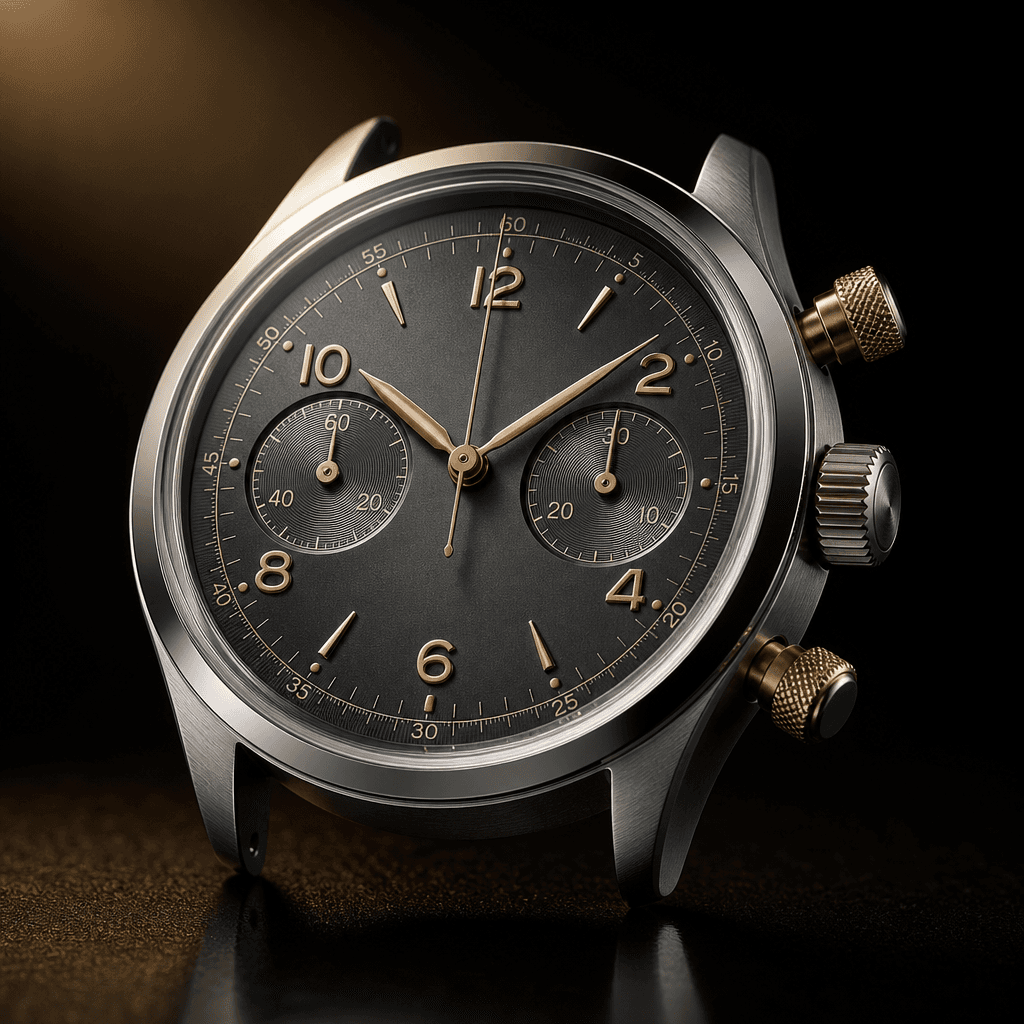 Complication
Chronograph
A stopwatch built into the watch.
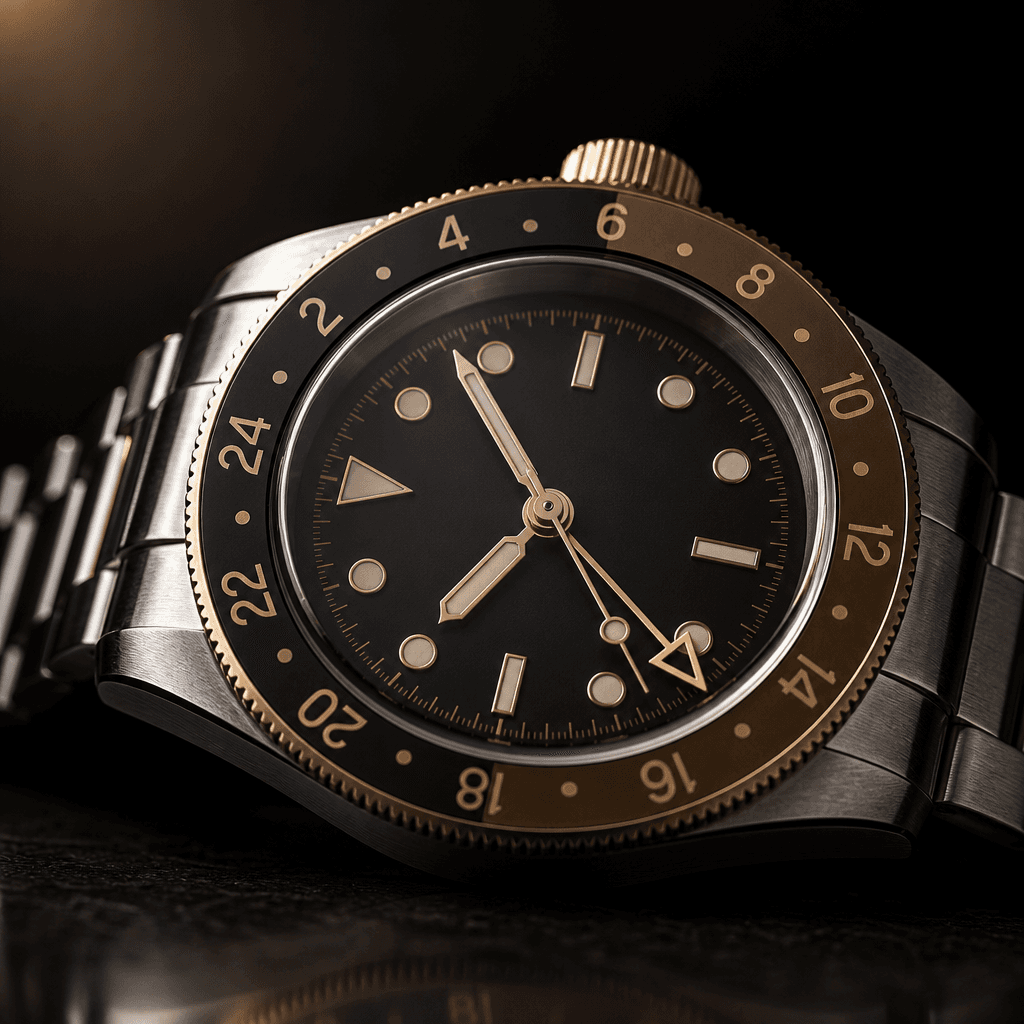 Complication
GMT / Dual Time
Tracks a second (or more) time zone at a glance.
 Complication
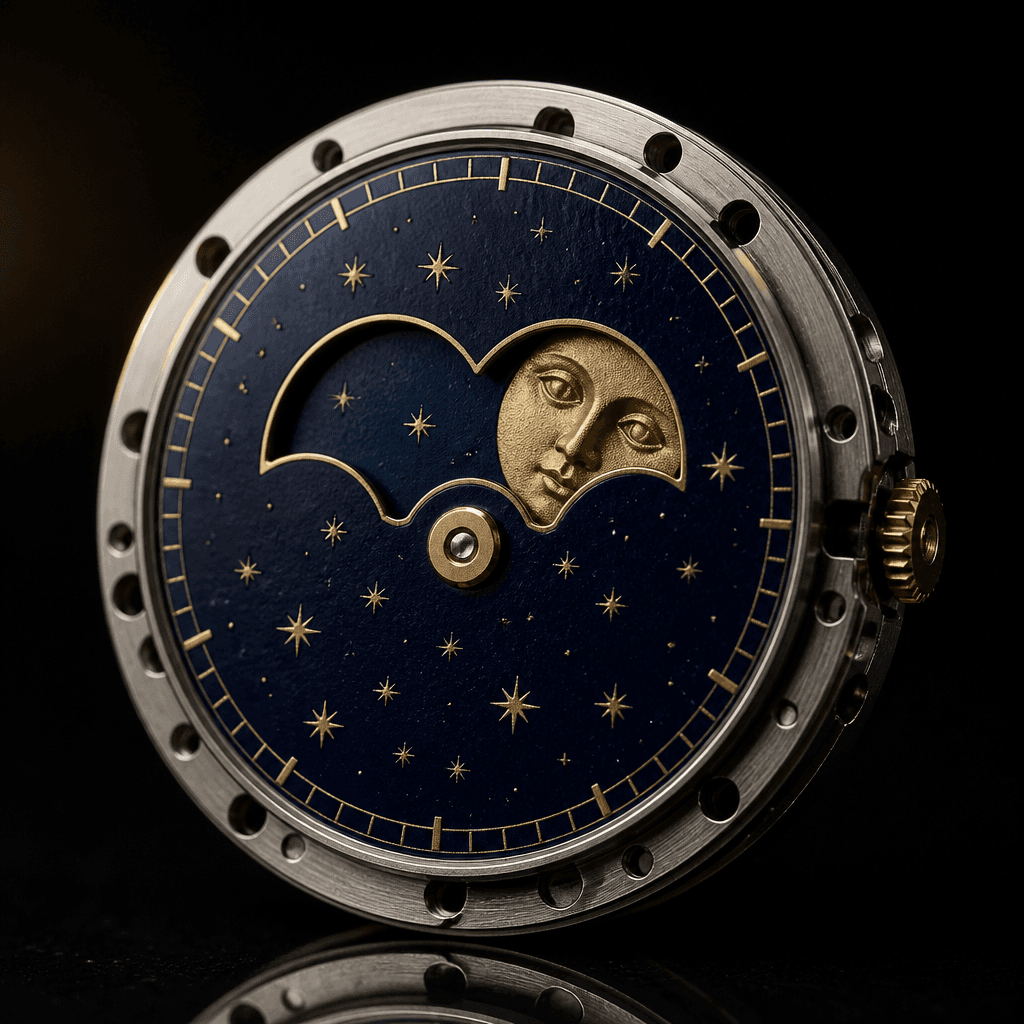
Moonphase
A little window that follows the lunar cycle.
 Complication
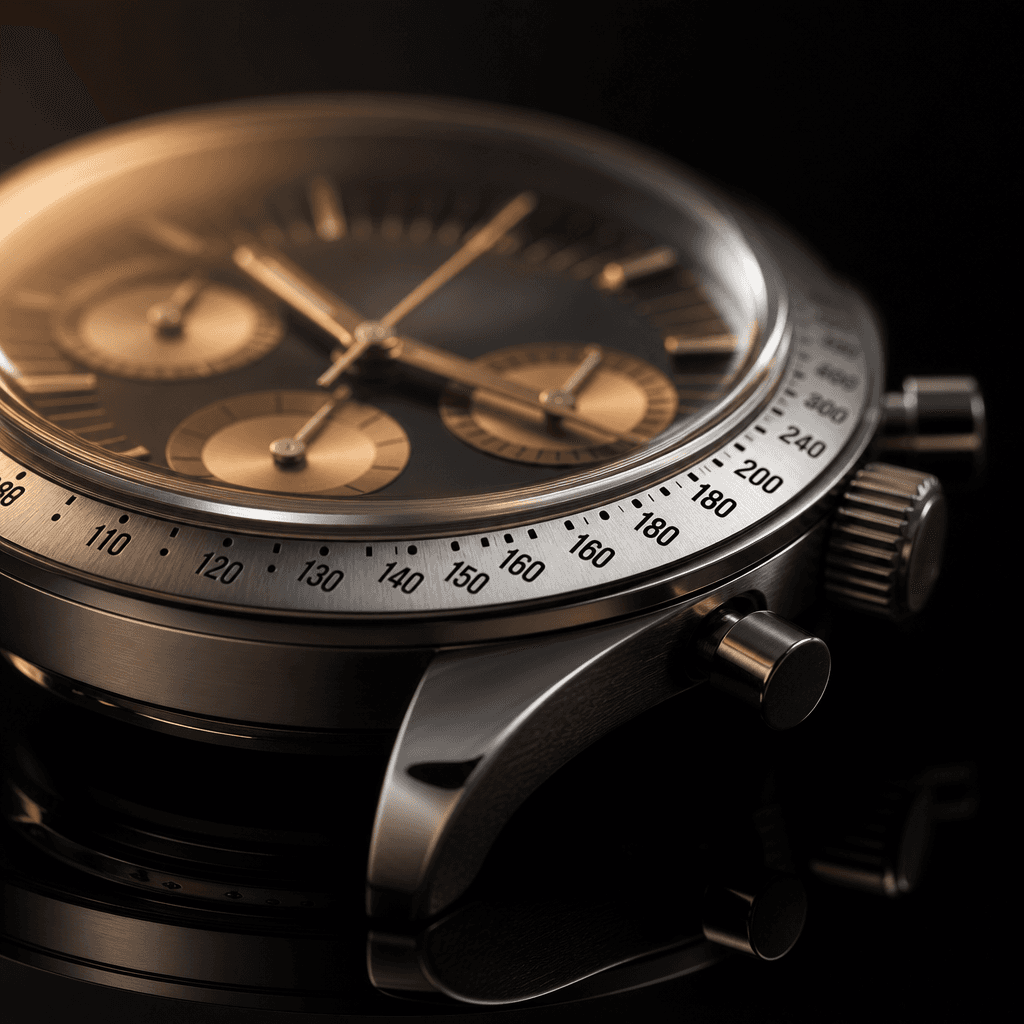
Tachymeter
A bezel scale that converts elapsed time into speed.