Movement
Kinetic
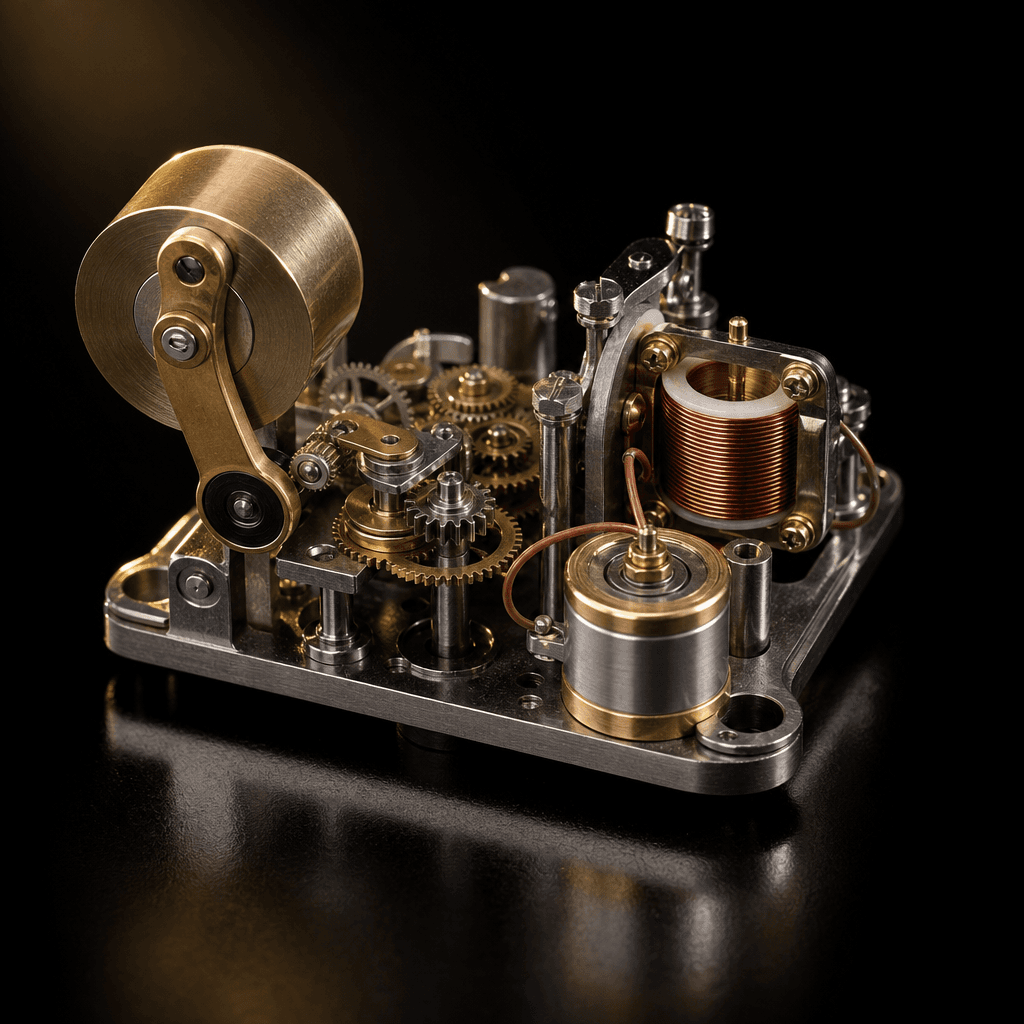
Wrist motion generates electricity for a quartz movement.
- Typical accuracy
- Typically ±15 seconds per month, like standard quartz.
How it works
A weighted rotor spins like an automatic's, but instead of winding a mainspring it drives a tiny generator. The current charges a capacitor, which powers a quartz movement. You get quartz accuracy with no battery to change — the watch is charged by being worn.
Strengths
- Quartz accuracy without battery replacement
- Stores charge for weeks or months when fully wound
- Familiar automatic-style feel on the wrist
Trade-offs
- The capacitor degrades after roughly 10–20 years and needs replacing
- Heavier than a plain quartz watch
- Fewer models made today, as solar has largely replaced it
- Stops if left unworn long enough to drain
Care tips
How to keep one running well between services.
- Wear it regularly, or swing it gently to top up the charge
- Expect a capacitor service rather than a battery change
- A seconds hand jumping in two-second steps means the charge is nearly exhausted
Keep reading
 Movement
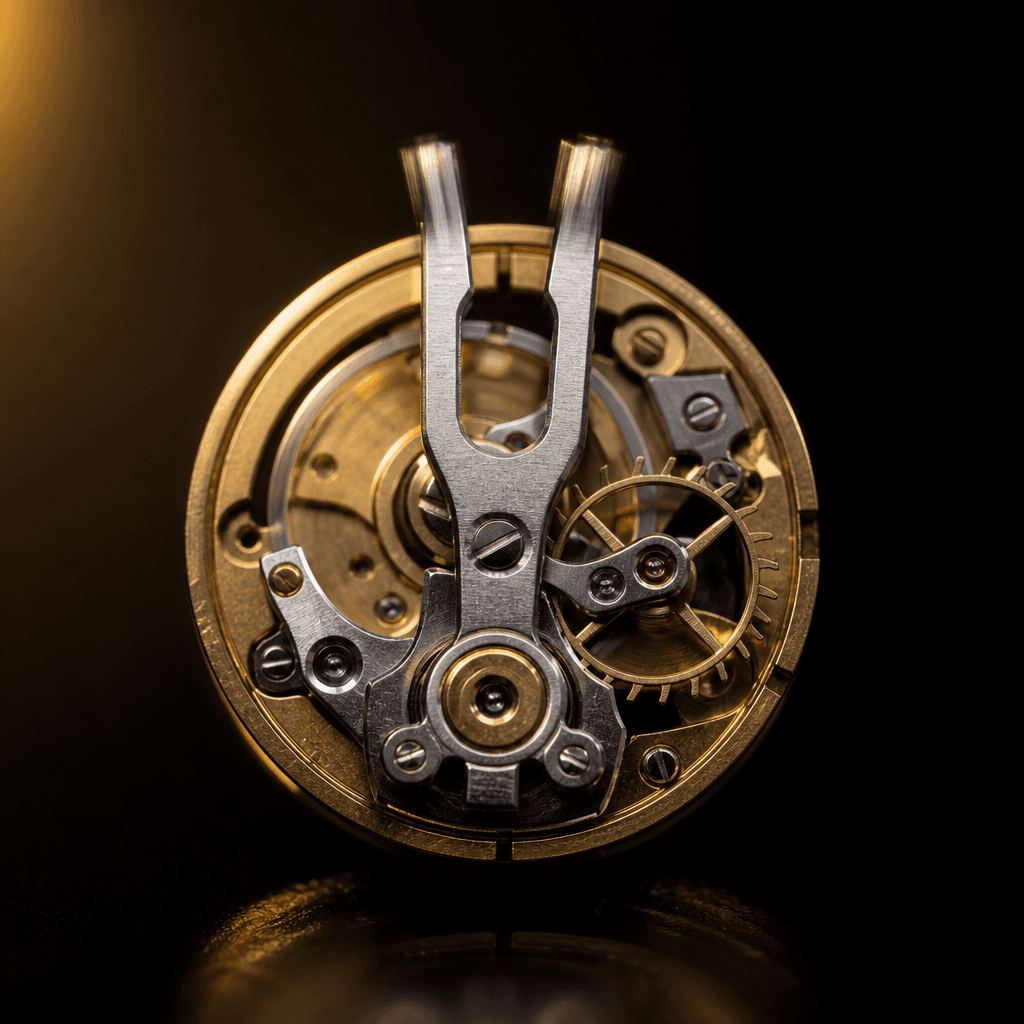
Tuning Fork (Accutron)
A humming fork instead of a ticking balance wheel.
 Movement
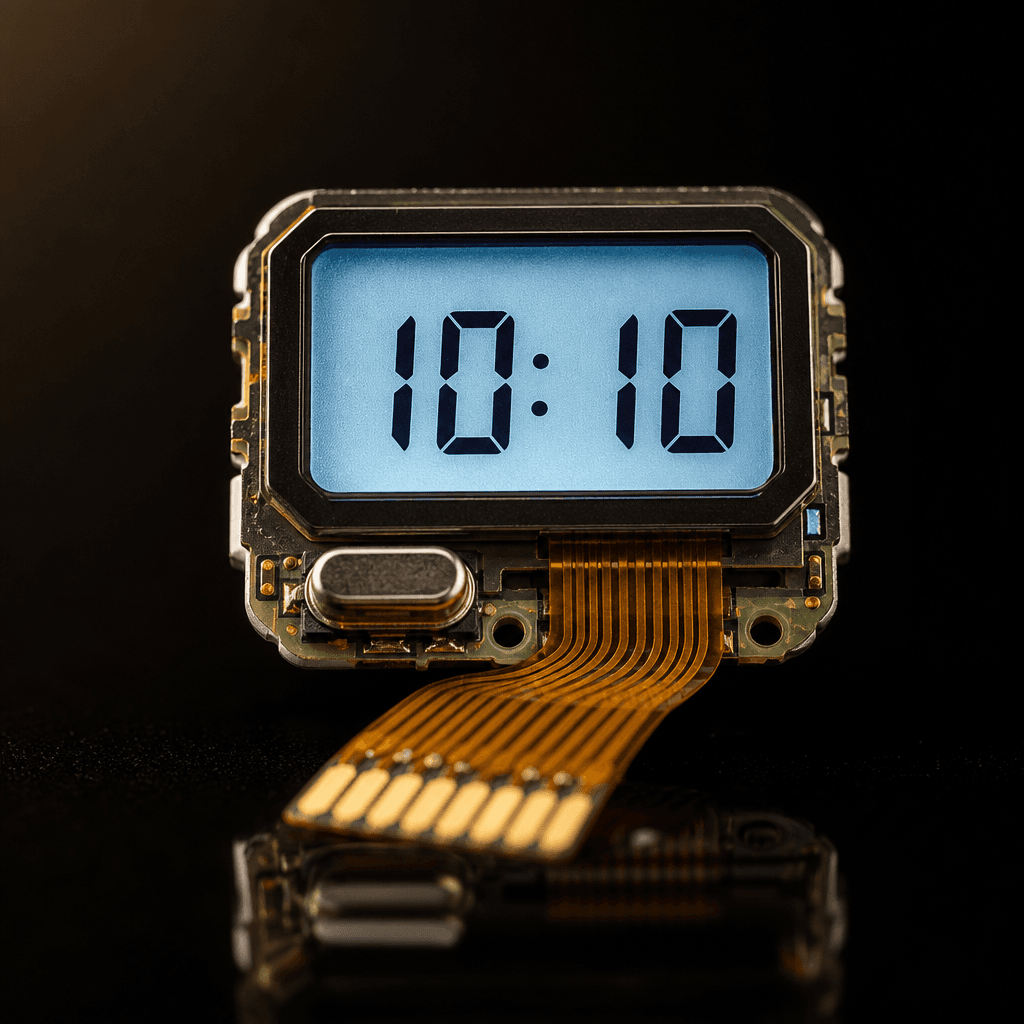
Digital (LCD/LED)
A quartz movement with a screen instead of hands.
 Complication
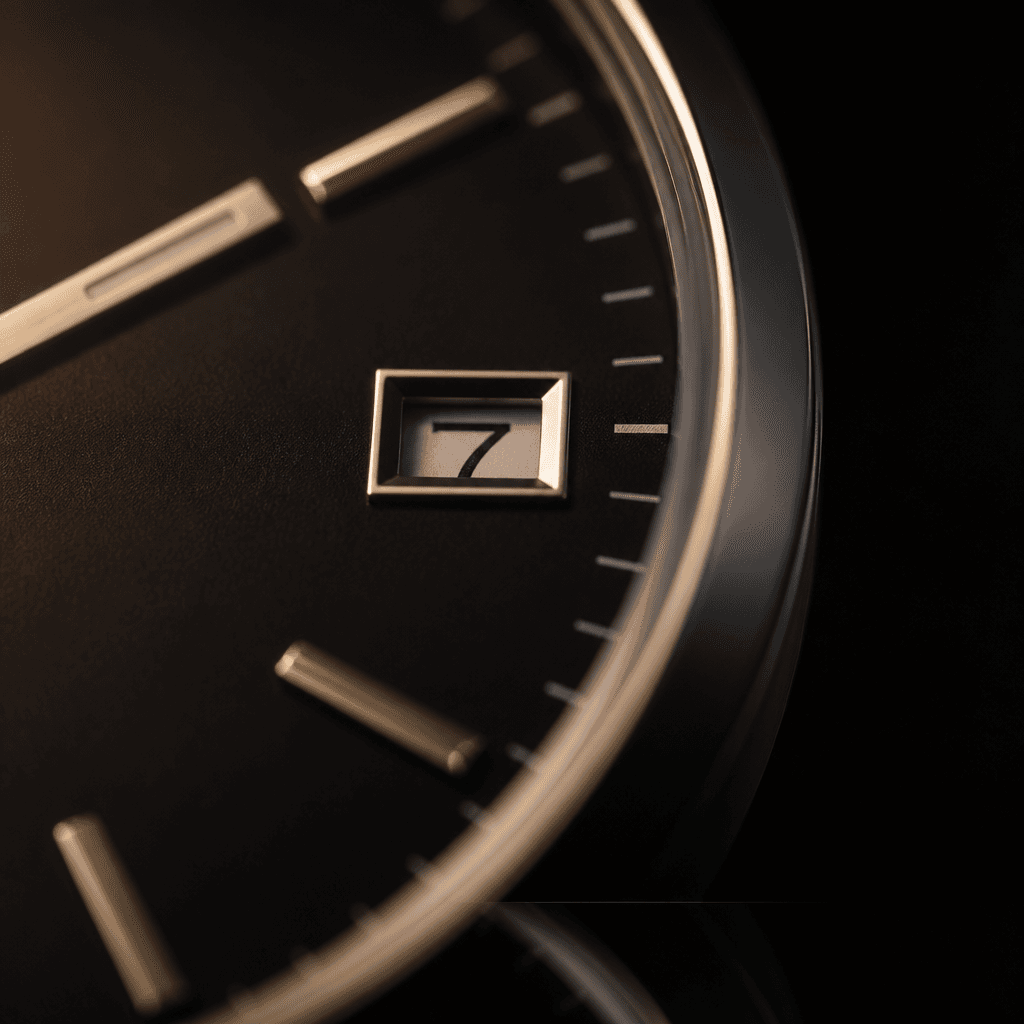
Date
The most common complication — the day of the month.
 Complication
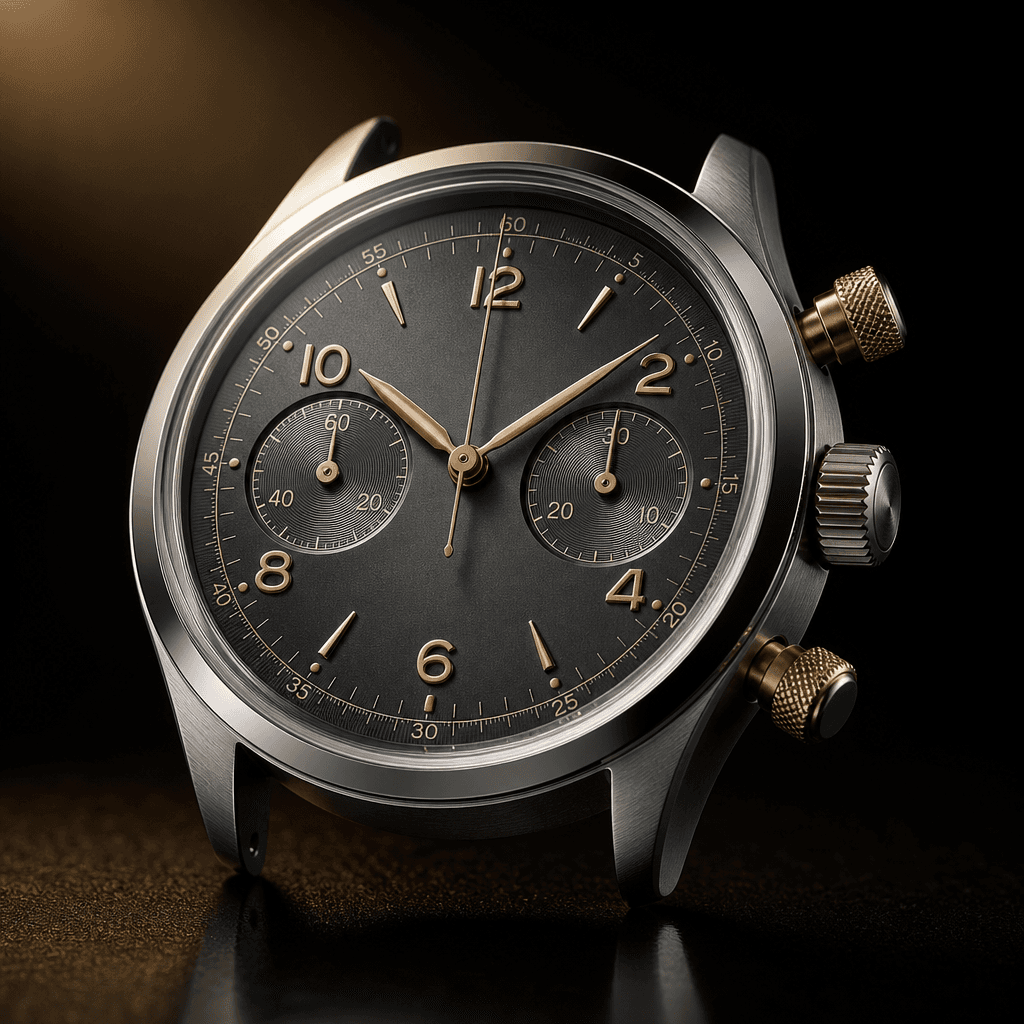
Chronograph
A stopwatch built into the watch.
 Complication
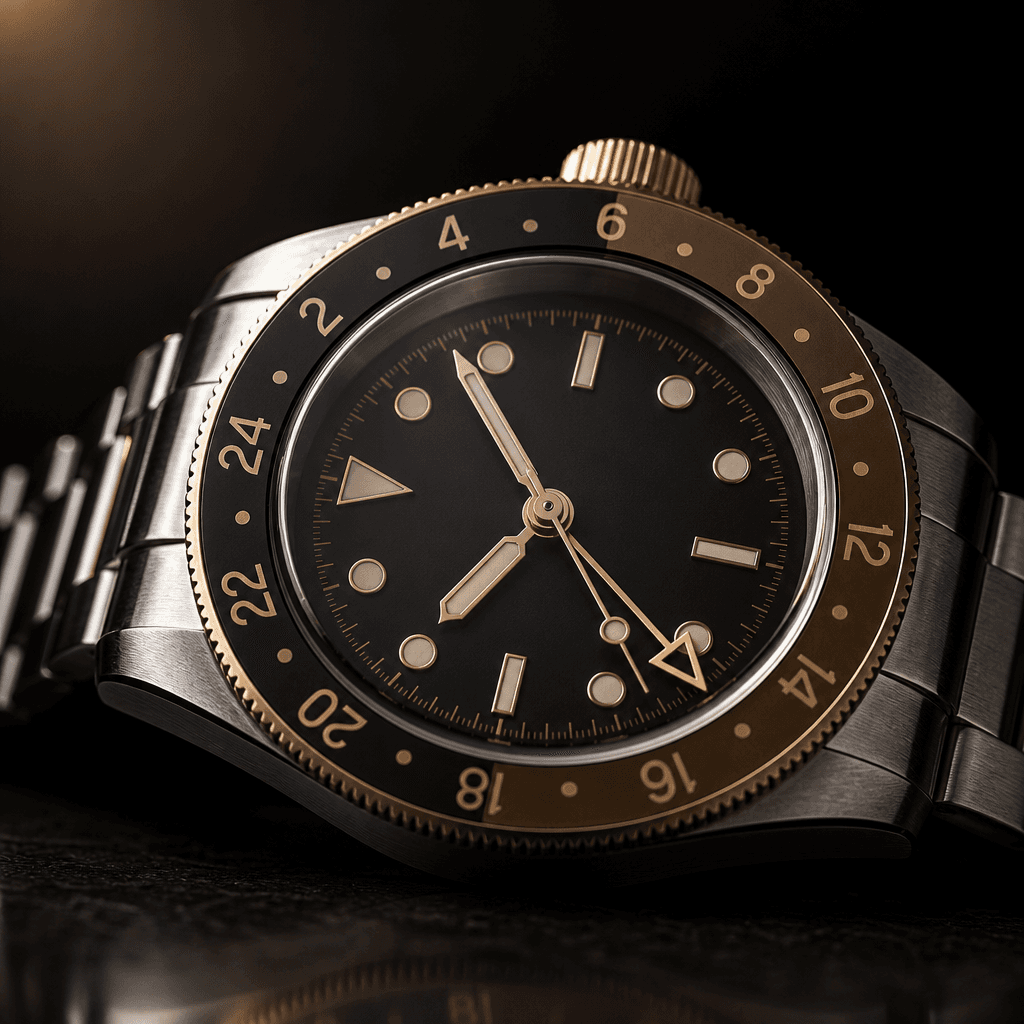
GMT / Dual Time
Tracks a second (or more) time zone at a glance.
 Complication
Moonphase
A little window that follows the lunar cycle.