Brand
Jaeger-LeCoultre
The watchmaker's watchmaker, in the Vallée de Joux.
- Country
- Switzerland
- Founded
- 1833
- Tier
- Haute Horlogerie
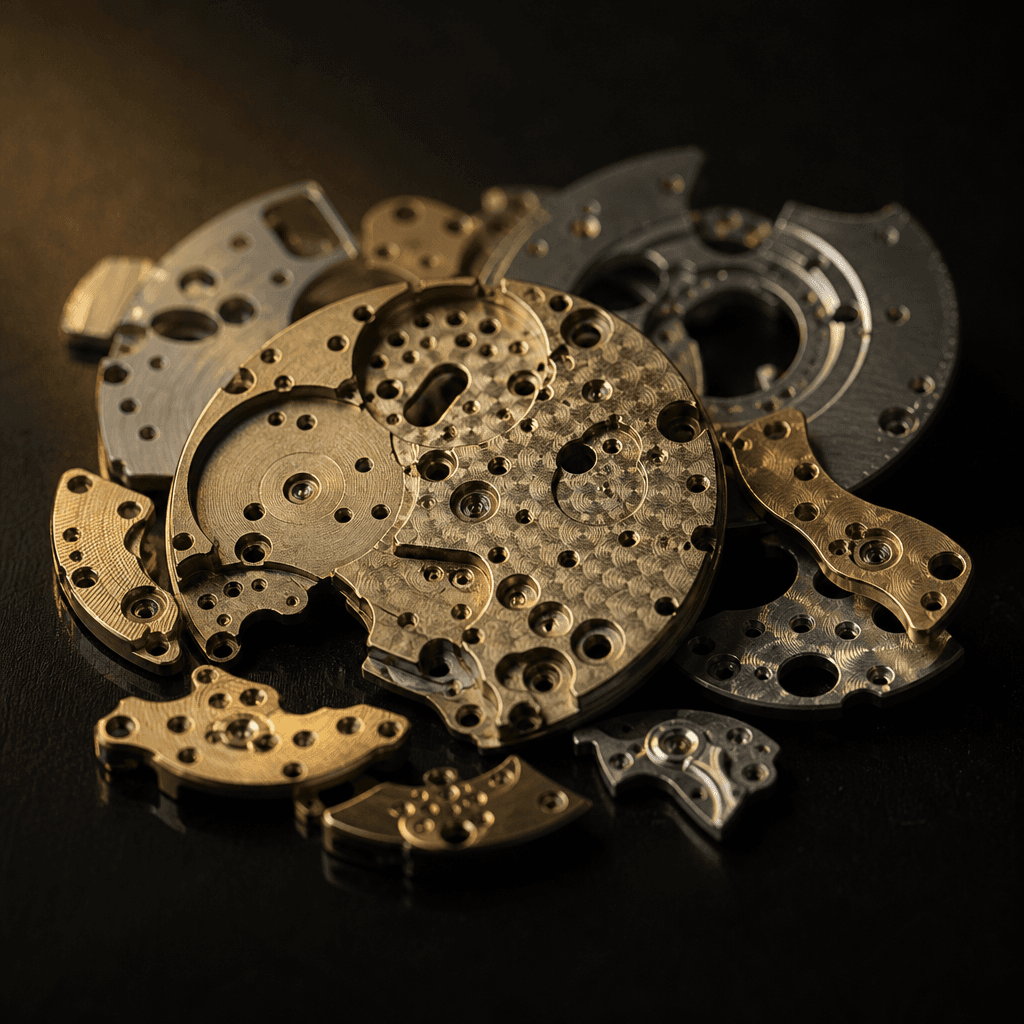
About Jaeger-LeCoultre
Jaeger-LeCoultre has invented, industrialised and supplied more movements than almost any house in Switzerland — including calibers that ended up inside Patek Philippe, Audemars Piguet and Vacheron Constantin. Its own catalogue runs from the 1931 Reverso, whose case flips to protect the crystal during polo, to the Atmos clock that runs on temperature changes in the air around it. Over 1,200 calibers have come out of Le Sentier.
Signature models
The references that define the house — and the ones you are most likely to meet.
- Reverso
- Master Ultra Thin
- Polaris
- Memovox
- Duometre
- Atmos clock
What to look for
Details worth checking before you trust a dial. None of them certify authenticity on their own.
- A Reverso's case should swivel with firm, even resistance and click positively into its cradle
- Art Deco gadroons — the three parallel lines top and bottom of a Reverso case — should be sharp and identical
- Caliber numbers engraved on the movement (e.g. 822, 854) plus the JLC hallmark; the 1000 Hours control mark appears on modern pieces
- Memovox alarm models have two crowns; the alarm should hum against the caseback, not rattle
Facts
- The Calibre 101, made since 1929, is still the smallest mechanical movement in series production — Elizabeth II wore one to her coronation.
- The Atmos clock is wound by a sealed capsule that expands and contracts with tiny temperature changes; a one-degree shift runs it for two days.
Keep reading
 Brand
BrandAudemars Piguet
The watch that made steel a luxury material.
 Brand
BrandBreitling
Chronographs for the cockpit.
 Brand
BrandPanerai
Frogman instruments, oversized and luminous.
 Brand
BrandZenith
High-frequency chronographs, in-house since 1969.
 Brand
BrandVacheron Constantin
The oldest watch manufacturer in continuous operation.
 Brand
BrandA. Lange & Söhne
German precision, finished twice over.